Skip to content

Know what to build before you build it

WEBMOBILEADMINAPI GATEWAYAUTHCOREJOBSEVENTSPRIMARY DBQUEUECACHE6 CAPABILITIESCLIENTEDGEDATA5 STAGES123456

A structured discovery phase turns your idea into validated user needs, a tested prototype, a prioritized roadmap and a realistic budget.

Parts list

  1. Stakeholder workshops
  2. User research and interviews
  3. Competitor and market scan
  4. User journeys and feature map
  5. Clickable prototype
  6. Technical feasibility review
Project
Product Discovery & Strategy
Discipline
Software Engineering
Drawn by
Nexzem engineering
Scale
Not to scale

Reducing guesswork before the first sprint

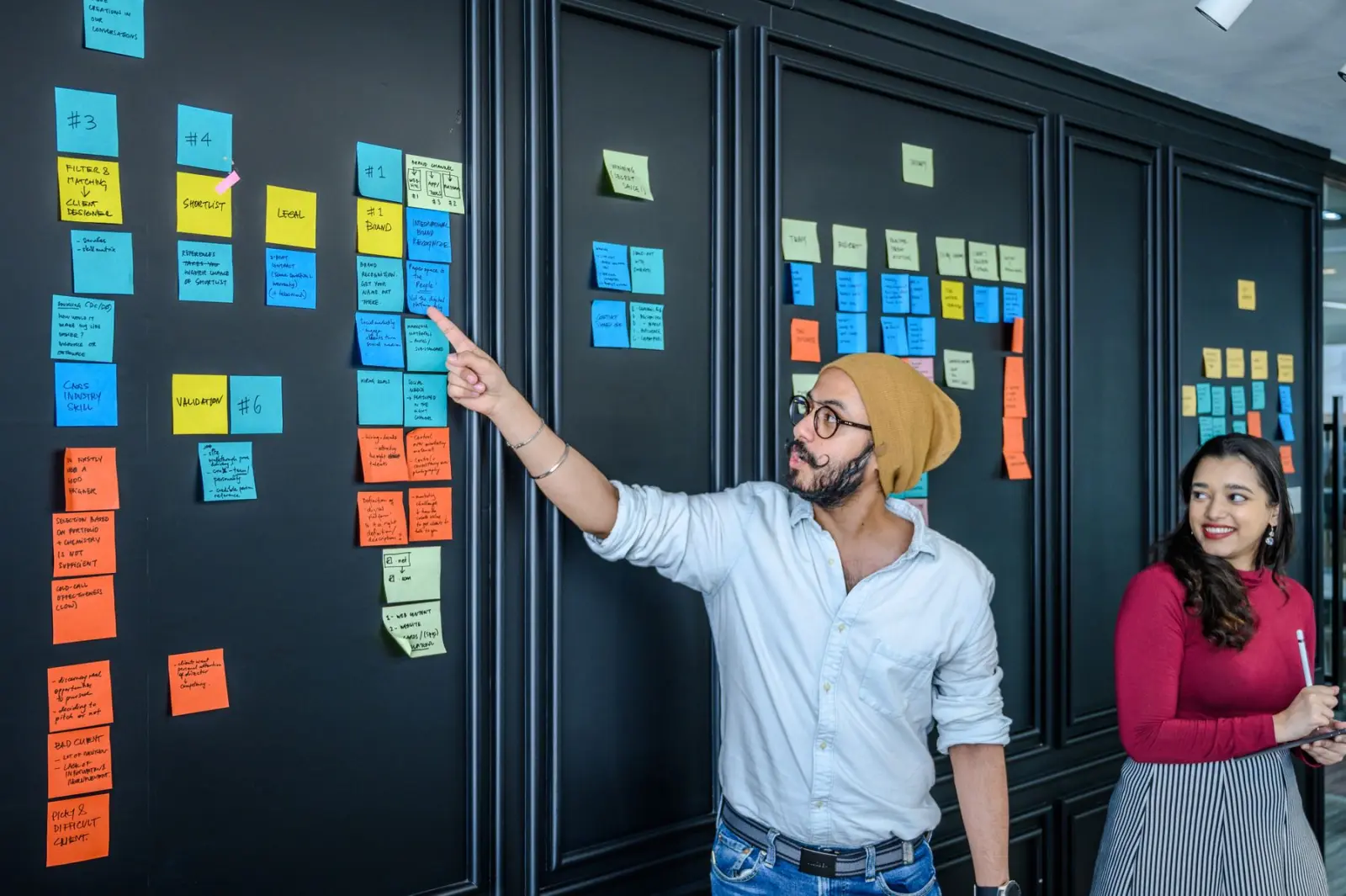
Product discovery is the short phase before development where you confirm who the product is for, which problem it solves, what the first release must include and what it will realistically cost. It replaces assumptions with interviews, competitor analysis, prototypes and technical checks, so development starts on a clear brief instead of a long wishlist that keeps changing.

Discovery is valuable for founders with a new idea, companies planning a large internal system, and product teams preparing a major new module. It is especially useful when stakeholders disagree on priorities, when the budget is fixed, or when an earlier attempt failed because the scope kept growing during development.

Nexzem runs discovery as a fixed-length engagement with a product strategist, a designer and a technical architect. We interview users and stakeholders, map journeys, test a clickable prototype and validate technical risks. You leave with research, designs and documents you fully own, written clearly enough to use with our team or any other development partner.

Product Discovery & Strategy, drawn as a system

Select any part to see what it covers and what it connects to. The layering is illustrative; your real architecture is drawn during discovery.

System explorer

Experience

Core logic

Facilitated sessions that align founders, managers and department heads on goals, target users, constraints and what success looks like for the first release.

Our Product Discovery & Strategy services

Validate the problem, users and scope before development, and leave with a prototype, roadmap and estimate.

  1. 01

    Stakeholder workshops

    Facilitated sessions that align founders, managers and department heads on goals, target users, constraints and what success looks like for the first release.

  2. 02

    User research and interviews

    Conversations with target users or customers to confirm their real problems, current workarounds and what would make them switch to your product.

  3. 03

    Competitor and market scan

    A structured look at existing products, pricing and gaps, so your positioning and feature choices are based on what the market already offers.

  4. 04

    User journeys and feature map

    End-to-end journey maps and a feature list split into must-have, should-have and later, giving a clear and defensible first-release scope.

  5. 05

    Clickable prototype

    High-fidelity Figma prototype of the key flows, tested with a handful of real users so usability issues surface before development.

  6. 06

    Technical feasibility review

    Architecture outline, integration checks, tech stack recommendation and identification of risky components that may need a proof of concept first.

  7. 07

    Roadmap and estimate

    A phased release roadmap with effort estimates, team composition and a budget range, ready for internal approval or investor conversations.

Product Discovery & Strategy with Nexzem: what you get

  • R-01

    Less rework later

    Problems found in a prototype cost far less to fix than problems found after launch.

  • R-02

    Aligned stakeholders

    Everyone signs off on the same scope, users and priorities before money is committed to development.

  • R-03

    Reliable budgets

    Estimates rest on validated scope and known technical risks, so the fixed quote for development holds.

  • R-04

    Portable deliverables

    You own the research, prototype and documents, and can use them with any development team.

How Product Discovery & Strategy engagements run

Sheet P-01, delivery sequence

Clear stages with a review at the end of each, so you always know what happens next and what it costs.

  1. S1

    Kickoff

    We gather existing material, define discovery goals and schedule stakeholder and user sessions.

  2. S2

    Research

    Stakeholder workshops, user interviews and competitor review run in parallel.

  3. S3

    Define

    Findings become personas, journeys and a prioritized feature map.

  4. S4

    Prototype and test

    Key flows are designed and tested with real users, then refined.

  5. S5

    Plan

    Architecture, roadmap, team plan and estimate are presented and handed over.

Where Product Discovery & Strategy fits

  • Detail A

    Replacing spreadsheet workflows in an enterprise

    An operations team running critical processes in shared spreadsheets maps every step, rule and report through discovery, then receives a prioritized design for a web application that keeps what works and removes error-prone manual steps.

  • Detail B

    Testing a startup pivot

    A startup considering a new customer segment interviews target users, tests a prototype and evaluates competitors, discovering which features matter most and whether the new segment would pay before rebuilding the product.

  • Detail C

    Launching a new product line

    An established company exploring a digital service for existing customers uses discovery to validate demand, define the first release, assess integration with current systems and build a business case for leadership approval.

  • Detail D

    Redesigning a legacy application

    Before rebuilding an aging internal system, a company documents how staff actually use it, which reports are essential and which features nobody touches, avoiding the common mistake of rebuilding unnecessary complexity in new technology.

  • Detail E

    Aligning stakeholders on an internal tool

    Several departments with conflicting requirements for a shared tool reach agreement through workshops, user research and a prototype, producing a roadmap that balances needs and a scope that can be delivered within budget.

Product Discovery & Strategy, in depth

Sheet N-01, general notes

N1

Signs you need product discovery

Discovery is worth doing when uncertainty is high and building the wrong thing would be expensive. Common signs include stakeholders who describe the product differently, a feature list that keeps growing without priorities, and assumptions about users that nobody has tested with real people.

Another sign is a request for a fixed quote on an idea that is still forming. Without discovery, vendors either pad estimates heavily to cover unknowns or quote low and recover through change requests. Discovery replaces guesswork with a defined scope that can be estimated with reasonable confidence.

Projects replacing existing tools also benefit. Old systems often contain workarounds, hidden rules and reports that people depend on without realizing it. Discovery uncovers these before the new system launches without them, which is a common reason replacement projects disappoint users.

Discovery is less necessary when the scope is small, well understood and similar to work the team has done before. In those cases, a short planning session and a prototype of the key screens may be enough to start building confidently.

N2

Research methods used in discovery

Discovery combines several research methods, chosen according to the questions that matter most and the time available. The goal is enough evidence to make confident decisions, not academic completeness. The methods below are the most commonly used in practice, often in combination.

User interviews reveal goals, frustrations and workarounds in people's own words. Speaking with a handful of users from each key group usually surfaces the main patterns. Observing people doing their actual work is even more revealing, because people often describe processes differently from how they perform them.

Analytics and support data add scale. Where an existing product or website exists, usage data, search logs and support tickets show what users do and where they struggle, complementing what interviews reveal about why. Together they show both the size and the cause of each problem.

Prototype testing closes the loop. Putting clickable screens in front of real users, asking them to complete tasks and observing where they hesitate validates design decisions cheaply before any production code exists. Even a few sessions catch most serious usability issues.

  • N2.aStakeholder interviews to align goals and constraints.
  • N2.bUser interviews and observation sessions.
  • N2.cReview of analytics, support tickets and existing tools.
  • N2.dCompetitor and market analysis.
  • N2.ePrototype testing with target users.
N3

Turning discovery into a roadmap and estimate

Discovery findings must become decisions. The team groups user needs into features, maps them to business goals and prioritizes them, typically separating what must be in the first release from what can follow later. A user journey map and feature map make these choices visible to everyone involved.

Technical exploration runs alongside. Architects review integrations, data sources, security requirements and technology options, identifying risks that may need a proof of concept. This prevents surprises such as an essential system with no usable API appearing halfway through development. Where risks remain open, the plan should say how and when they will be resolved.

The estimate builds on this work. With defined features, designs and technical approach, effort can be estimated per feature with stated assumptions. Ranges are honest where uncertainty remains, and phasing lets you choose a first release that fits budget and timeline.

The final deliverables should be portable: documents, prototypes and estimates that any competent team could use. That independence protects your investment and makes discovery valuable whether or not the same partner builds the product. Ask for this explicitly in the discovery agreement.

Technologies we use for product discovery & strategy

Proven, well-supported tools chosen for your scale, budget and team, never for novelty.

  • Figma
  • Jira
  • React
  • Node.js
  • Python
  • AWS

Product Discovery & Strategy FAQs

Something else on your mind? Ask a consultant and get a reply within one business day.

How long does product discovery take?

Most discovery phases take 2-5 weeks, depending on the number of user groups, stakeholders and how complex the product is. The length and deliverables are fixed upfront.

What does a discovery phase cost?

Cost depends on how many user interviews and workshops are needed, the number of flows to prototype and the depth of technical review. Discovery is priced as a fixed engagement, quoted after a free consultation.

Is discovery worth it for a small project?

For a very small, well-understood tool, a short scoping call may be enough. Discovery pays off when the budget is significant, users are not yet well understood, or several stakeholders have different expectations.

What do we receive at the end?

Typically a research summary, personas and journey maps, a prioritized feature list, a tested Figma prototype, an architecture outline, a phased roadmap and an effort and budget estimate.

Do we have to build with Nexzem after discovery?

No. The deliverables belong to you and are written so any competent team can use them. Many clients do continue with us, but there is no lock-in.

Can discovery be done remotely?

Yes. Workshops and user interviews run well over video calls. For clients near Dehradun or teams that prefer it, we can also run in-person sessions.

Who from our team needs to be involved in discovery?

A decision maker who owns the outcome, representatives of each main user group, and someone who understands existing systems and data. Their involvement is concentrated in workshops, interviews and reviews, typically a few hours each week, but it is essential for accurate findings and stakeholder alignment.

How many users do you interview during discovery?

It depends on how many distinct user groups exist. A handful of interviews per key group usually reveals the main patterns, with more added if findings conflict or a group is especially varied. Combining interviews with analytics and prototype testing gives confidence without lengthy research programs.

Can discovery conclude that we should not build the product?

Yes, and that is a valuable outcome. If research shows weak demand, unsolvable technical constraints or a cheaper existing solution, we say so clearly. Stopping or changing direction after a short discovery costs far less than discovering the same problems after months of development.

Since our first project

Happy clients
250+
Projects delivered
150+
Industries served
15+
Pricing and engagement models
  • Mutual NDA first

    Signed before any detailed discussion of your idea.

  • You own the code

    100% of the source code and IP is yours on delivery.

  • Reply in one business day

    From a solutions consultant, Mon to Sat, 09:30 to 18:30 IST.

  • Estimate in 48 hours

    A fixed quote or team estimate, broken down by milestone.

We work with clients across the USA, UK, Australia, UAE, New Zealand and India.

Where we work

Tell us what you're building.

A solutions consultant replies within one business day with next steps, a rough estimate and a suggested team.